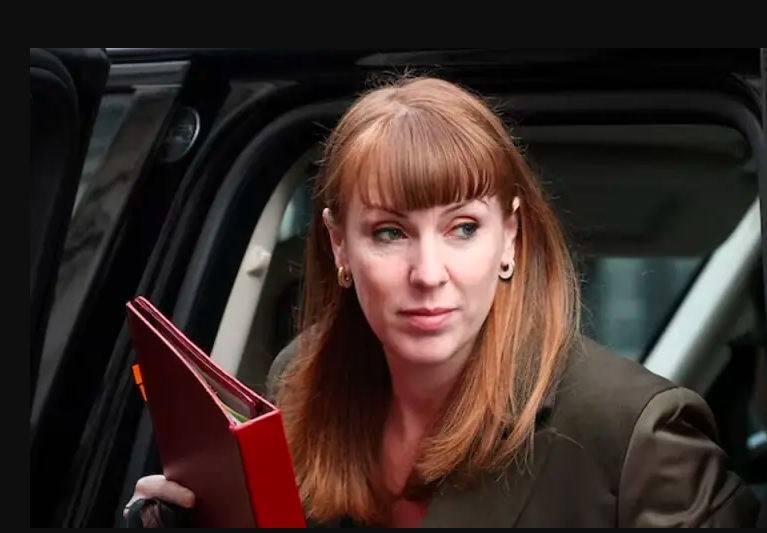
Political history of the United Kingdom Three explained why the resignation of Angela Rayner, on 5 September 2025, shook the political landscape by forcing her to resign as Deputy Prime Minister and Housing Secretary. Her exit is after revelation that she did not pay PS40,000 in stamp duty on a purchase in Hove, and this led to a scandal which pushed her out of government.
This is one of the most sensational quitting efforts in recent British politics, both due to the financial irregularity in question and due to Rayner herself, being one of the central figures in the Labour Party and a symbol of the working-class origins.
The Tax Irialogue.
The purchase of PS800,000 flat in Hove that Rayner claimed was her primary home to pay her tax was at the center of the scandal. This enabled her to evade the increased stamp duty rate which is charged on second homes.
This became a problem when it became apparent that Rayner had retained her original house in Ashton-under-Lyne, which remained liable to council tax as her main residence and much of which was held in trust on her behalf on behalf of her disabled son. The case law that was arrived at by the body of lawyers was that the Hove property was a second home in the UK taxation law and, hence, subjected to the duty cap.
The amount of this was around PS40,000 of outstanding tax in the UK. Although Rayner claimed that she did this with good intent and that she did not intend to avoid her duties, these were the politics of the situation.
Investigation and Findings
After press attention, Rayner has sent herself to the independent ministerial standards adviser. It was ascertained that, even though she had not made any intention to lie or cheat specifically, she had not maintained the utmost practice of conduct, such as was required of a minister of the Crown.
This conclusion was damning. Deliberation in British politics is much about perception than about legality. Unwanted errors, even the minor ones, can undermine the trust of the population, especially in cases with senior figures in leadership positions in matters regarding housing and justice in the tax related system.
Rayner took complete responsibility at the report. She has given a public apology, said that she was sorry that she did not go to a specialist tax advisor and she will pay the outstanding amount.
The Resignation
It was on 5 September that Rayner resignated as a government and as a Deputy Leader of the Labour Party. In her statement, she said:
Prime Minister Keir Starmer referred to the move as very painful and said Rayner played a huge part in getting Labour to landslide victory in the 2024 election. Concurrently, he admitted that she had to leave so as to maintain the credibility of his government.
Close to the Cabinet Reshuffle.
The departure of Rayner caused a fast redesigning of the cabinet of Starmer. As part of one of the most thorough reorganisations that had been made since Labour returned to power:
David Lammy became the Deputy Prime Minister and at the same time made him the Justice Secretary.
Yvette Cooper put on the role of Home Office and joined the Foreign office as a Secretary.
Shabana Mahmood was made the new Home secretary.
Steve Reed replaced Rayner as an appointment as Housing Minister, and assumed his old brief.
Pat McFadden took over a Work and Pensions Department which had been increased.
Rachel Reeves continued to be Chancellor of the Exchequer, which also gave economic policy continuity.
The reshuffle was not only an exercise to relieve Rayner but to re-establish authority to the leadership of Starmer when there were questions questioning the stability of the Labor.
Internal Politics and Leadership Problems.
Angela Rayner had never fit anywhere in the Labour Party. She was born in a working-class family, and was generally admired by the members of the grassroots level and in many cases was a link from the left wing of the party to the centrist leadership.
This seems to leave a vacuum that will escalate internal tensions. The vacant office of the Deputy Leader is likely to have a leadership battle. Possible nominees on the left and the centre of the Labour party are already being debated, and the result of such may influence the future years of the party in its ideology.
In the case of Starmer, his task is this: he needs to ensure that the crisis does not escalate into a civil war among the differing forces of the Labour party, and he at the same time needs to assure the voters that his administration is still committed to bringing economic stability and reforms to the various governmental agencies.
A Test of Starmer’s Authority
Political observers have regarded this as a big test to the Prime Minister. Starmer became prime minister with pledges of honesty and proficiency following decades of Conservative self-inflicted tumult. His deputy also resigns, which negatively affects such an image, although Rayner may not have acted with dishonest purposes.
Starmer has attempted to draw a line under the scandal by acting swiftly in restructuring the cabinet, and by underlining accountability. Critics also point out that the scandal would hurt the momentum of the Labour party, particularly since the government is going to face the high stakes autumn Budget in November 2025.
Wider Implications
The Standards of Ministerial Accountability.
The stepping down brings out the strictness of the ministerial code of conduct which ministers are expected to follow. Technical violations, even those that make a question of the integrity of a politician, may ruin careers. The case of Rayner supports the need of greater scrutiny of a public office in comparison to the private life.
Renewed Debate on Stamp Duty
The scandal also has rekindled a debate on the fairness of stamp tax which happens to be amongst the most unpopular taxes in UK (United Kingdom). It is criticised on the grounds that it distorts the housing market, discourages mobility and that it is uneven with London and the South East most affected. Although Labour is yet to indicate the required reforms, the scandal could exert some pressure in that regard.
Pressure on Opposition and Trust of People.
When the resignation goes on is a subject of politics. As Reform UK continues to gain momentum under Nigel Farage and the Conservatives gain back strength under a new leader the last thing that Labour could afford is long-term diminished reputation. The level of public trust is low and the scandal threatens to give fuel to the adversaries.
What Happens Next?
Deputy Leadership Contest – Labour will shortly have a new Deputy Leader, something that will unveil the differences in ideological beliefs. Lefthanders will run on the redistributive policy agenda, and centrists will advocate remaining aligned to the practical politics of Starmer.
Cabinet Stability – The new team will be required to demonstrate itself within a short time span, especially on the issue of housing, welfare and foreign affairs. The capacity of Lammy, Cooper and Mahmood to create the perception of unity would be vital.
Focus on Economic Policy – Government needs to re-focus on the economy before the autumn Budget. Chancellor Reeves is being pressured to maintain fiscal discipline and at the same time assure investments in the citizens services.
Conclusion
The case of Angela Rayner quitting her job because of a tax mistake is not only a personal loss of ground but a turning point to the Labour government. It has tested the authority of Prime Minister Starmer, caused a large-scale reshuffle of the Cabinet and made factional battles within the party possible.
Simultaneously, the episode shows the power of the political accountability system in Britain: even the strong ministers are not able to avoid audits in case of wrongdoing.
To the Labour, the months to come are damage control, unity and delivery. It can be the last action in her government career, although to Rayner it can be said that it is her own farewell to the politics of government, but her presence in the grassroots of the party combined with her symbolism as a leader of working classes means that she will not completely disappear off the political scene.