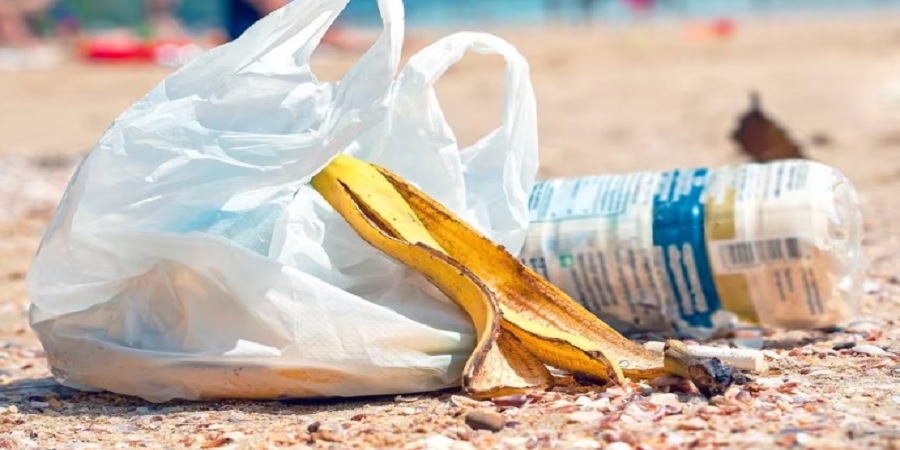
Plastic bags are everywhere, and too many slip into rivers and onto beaches. A new analysis finds that policies that either charge a small fee per bag or prohibit them outright cut the share of bags found during shoreline cleanups by 25 to 47 percent.
The study combed through hundreds of city, county, and state rules passed between 2017 and 2023. It matched those policies to more than 45,000 volunteer cleanups across the United States to see what actually changed on the ground.
The research was coauthored by Kimberly L. Oremus of the University of Delaware’s School of Marine Science and Policy (UDEL).
Oremus and her collaborator set out to measure litter, not just shopping behavior, so the results speak to what ends up in nature.
The team relied on citizen science, meaning trained volunteers recorded what they collected during beach, river, and lake cleanups.
They drew on TIDES, a public database that stores those counts in one place so researchers can analyze patterns across time and place.
Studying plastic bag policies
To isolate the effect of bag policies, the authors used a Difference-in-Differences (DiD) approach that compares places with and without new laws over the same period.
That design helps rule out unrelated trends that affect everyone, such as national shifts in shopping or packaging.