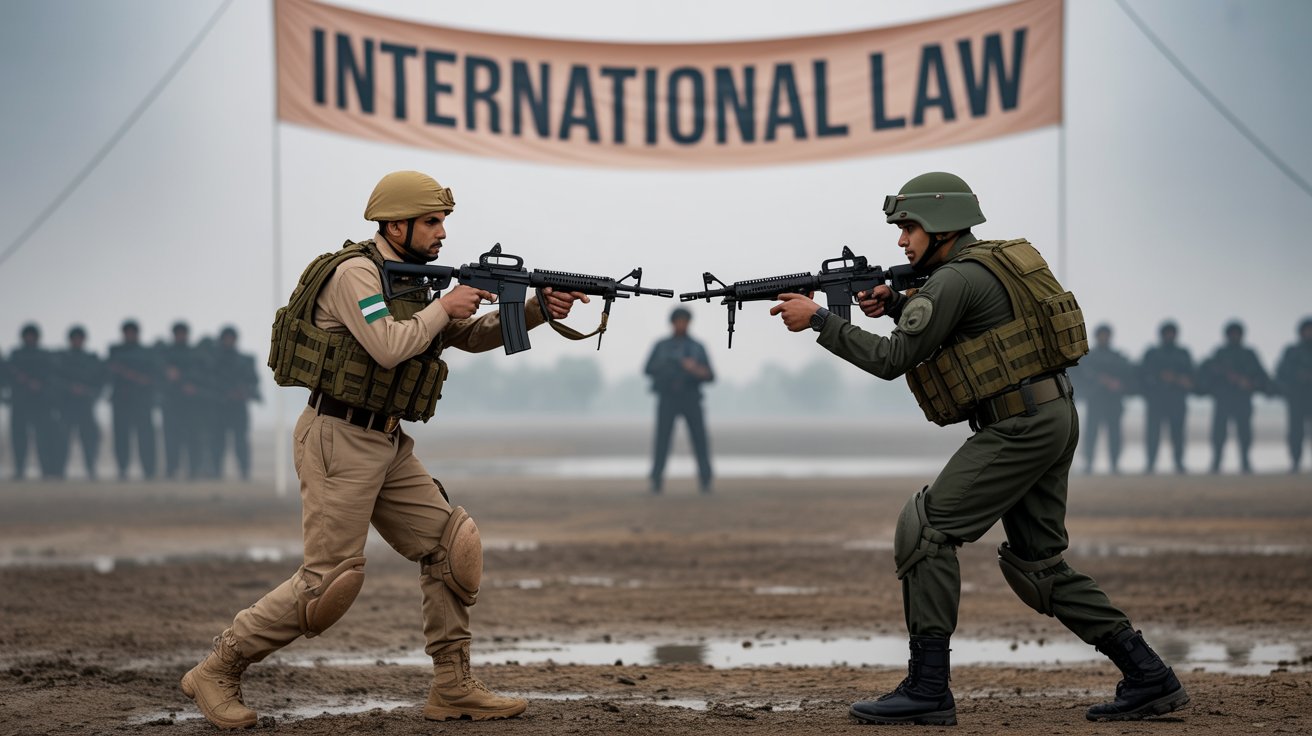
Introduction: Why Pakistan and Indian War 2025 International Law Matters
Tensions between India and Pakistan have long been a focal point of global concern, especially in 2025, with recent escalations over Kashmir. The Pakistan and Indian War 2025 International Law framework is critical in navigating these conflicts, ensuring actions align with global legal standards like the United Nations Charter. This article dives into how international law governs potential conflicts, offering clarity on complex issues like nuclear risks, territorial disputes, and diplomatic resolutions. Whether you’re a student, a policy enthusiast, or someone curious about global peace, understanding these laws helps you grasp the stakes involved.
The year 2025 has seen heightened tensions, with incidents like the Pahalgam attack sparking fears of war. International law acts as a guardrail, preventing escalations that could destabilize South Asia and beyond. By exploring treaties like the Indus Waters Treaty and agreements like the Non-Attack Agreement, we’ll uncover how nations balance sovereignty and global responsibility. This guide aims to make Pakistan and Indian War 2025 International Law accessible, offering practical insights and real-world examples to keep you informed and engaged. Let’s break it down step-by-step to understand how these laws shape peace and conflict in 2025.
Word count: ~260 words
What Is Pakistan and Indian War 2025 International Law?
International law governs how nations interact during conflicts, and in the context of Pakistan and Indian War 2025 International Law, it’s about ensuring actions between India and Pakistan comply with global norms. These laws include treaties, customary practices, and principles outlined by bodies like the International Court of Justice (ICJ). For India and Pakistan, key frameworks include:
-
United Nations Charter: Prohibits the use of force except in self-defense or with UN Security Council approval.
-
Geneva Conventions: Protects civilians and prisoners during conflicts, critical in volatile regions like Kashmir.
-
Bilateral Agreements: The 1988 Non-Attack Agreement prevents strikes on nuclear facilities, reducing escalation risks.
In 2025, these laws are tested by events like India’s suspension of the Indus Waters Treaty and cross-border strikes following the Pahalgam attack. International law aims to de-escalate tensions, ensuring both nations avoid actions that could lead to catastrophic consequences, like nuclear conflict.
Anecdote: A Diplomat’s Dilemma
Imagine being a UN diplomat in May 2025, tasked with mediating between India and Pakistan after India’s strikes on Pakistani territory. The room is tense—Indian officials cite self-defense, while Pakistan calls it an “act of war.” You lean on the UN Charter, urging restraint, knowing a misstep could spiral into a nuclear crisis. This real-world scenario underscores why Pakistan and Indian War 2025 International Law is a lifeline for peace.
Historical Context: India-Pakistan Tensions and International Law
To understand Pakistan and Indian War 2025 International Law, we need to look back. The India-Pakistan conflict began in 1947 during the Partition, with Kashmir as the flashpoint. Three wars (1947, 1965, 1971) and numerous skirmishes have shaped their rivalry. International law has often played a role:
-
1947-48 War: Ended with a UN-mediated ceasefire, establishing the Line of Control (LoC).
-
1971 War: Led to Bangladesh’s creation, with the Simla Agreement reinforcing bilateral resolutions.
-
1999 Kargil Conflict: International pressure, including from the US, pushed Pakistan to withdraw, showing law’s influence.
In 2025, the Pahalgam attack and India’s retaliatory strikes echo past crises. The difference? Nuclear capabilities and global stakes are higher, making adherence to Pakistan and Indian War 2025 International Law non-negotiable.
Key Legal Frameworks in Pakistan and Indian War 2025 International Law
Let’s explore the legal tools shaping Pakistan and Indian War 2025 International Law. These frameworks guide actions and prevent escalation.
1. United Nations Charter
The UN Charter is the cornerstone of international law. Article 2(4) bans the use of force against another state’s territory, while Article 51 allows self-defense if an “armed attack” occurs. In 2025, India’s strikes on Pakistan raise questions: Were they lawful self-defense or a violation? The UN Security Council’s closed consultations on May 5, 2025, highlight global concern.
2. Indus Waters Treaty
The Indus Waters Treaty (1960) allocates river waters between India and Pakistan. India’s 2025 suspension, called an “act of war” by Pakistan, tests this treaty’s resilience. International law, backed by the World Bank, urges compliance to avoid humanitarian crises.
3. Non-Attack Agreement
Signed in 1988, the Non-Attack Agreement commits both nations to avoid targeting nuclear facilities. This confidence-building measure is vital in 2025, given the nuclear risks.
4. Geneva Conventions
The Geneva Conventions protect civilians and combatants. India’s crackdown in Kashmir and Pakistan’s alleged support for militants raise concerns about compliance.
5. Customary International Law
Unwritten rules, like proportionality in military actions, bind both nations. Excessive force in 2025 could violate these norms, inviting global condemnation.
Step-by-Step Guide: How International Law Manages Conflict
Here’s a practical guide to how Pakistan and Indian War 2025 International Law works to manage tensions:
-
Identify the Trigger: Events like the Pahalgam attack spark crises. International law requires evidence before action, as India’s claims against Pakistan lack hard proof.
-
Engage Diplomacy: The UN, US, and others mediate, as seen with US officials’ calls to both nations in May 2025.
-
Apply Legal Frameworks: The UN Charter, treaties, and customary law guide responses, ensuring actions like strikes are proportionate.
-
Monitor Compliance: Bodies like the ICJ or UN Security Council assess violations, though enforcement is tricky.
-
De-escalate: Confidence-building measures, like the Non-Attack Agreement, reduce risks of nuclear or large-scale conflict.
-
Seek Long-Term Solutions: Address root causes, like Kashmir’s status, through dialogue, respecting self-determination principles.
This process isn’t foolproof, but it’s a roadmap for peace, grounded in Pakistan and Indian War 2025 International Law.
Challenges in Applying Pakistan and Indian War 2025 International Law
Despite its importance, Pakistan and Indian War 2025 International Law faces hurdles:
-
Lack of Evidence: India’s strikes lack clear proof linking Pakistan to the Pahalgam attack, complicating legal justification.
-
Nuclear Risks: Both nations’ nuclear arsenals raise stakes, with a 1989 US report noting a “high” risk of miscalculation.
-
Domestic Pressures: Leaders like Narendra Modi face public demands for action, sometimes overriding legal restraint.
-
Global Distractions: Crises elsewhere, like in the Middle East, divert attention from South Asia.
Anecdote: A Kashmiri’s Perspective
Meet Ayesha, a teacher in Srinagar, Kashmir, in 2025. After the Pahalgam attack, her school closes amid curfews. She wonders why international law can’t stop the cycle of violence. “We just want peace,” she says, echoing millions caught in the crossfire. Her story reminds us that Pakistan and Indian War 2025 International Law isn’t just about treaties—it’s about people’s lives.
The Role of Global Actors in Pakistan and Indian War 2025 International Law
International players are crucial in enforcing Pakistan and Indian War 2025 International Law:
-
United States: The US has mediated past crises, with Vice President JD Vance engaging India during the 2025 tensions. Its support for India, via initiatives like the US-India COMPACT, shapes dynamics.
-
China: Pakistan’s ally, China, strengthens ties through the China-Pakistan Economic Corridor (CPEC), influencing Pakistan’s stance.
-
UN: The UN Security Council’s May 2025 consultations underscore its role, though veto powers limit action.
-
World Bank: As guarantor of the Indus Waters Treaty, it pushes for compliance.
These actors balance power and law, ensuring Pakistan and Indian War 2025 International Law holds weight.
Why Understanding Pakistan and Indian War 2025 International Law Benefits You
At Apna Qanoon, we believe knowledge is power. Understanding Pakistan and Indian War 2025 International Law equips you to:
-
Stay Informed: Grasp global events shaping South Asia’s future.
-
Engage in Dialogue: Discuss conflicts with confidence, backed by legal insights.
-
Support Peace: Advocate for solutions that respect international norms.
Our legal resources and expert consultations provide tools to dive deeper. By investing in this knowledge, you’re not just learning—you’re contributing to a peaceful world. Subscribe to our newsletter at Apna Qanoon for updates on international law and more.
Future Outlook: Can Pakistan and Indian War 2025 International Law Ensure Peace?
Looking ahead, Pakistan and Indian War 2025 International Law faces both challenges and opportunities:
-
Dialogue: Reviving talks, as attempted in the 1980s by Rajiv Gandhi and Benazir Bhutto, could ease tensions.
-
Technology: AI and monitoring tools can verify compliance with treaties like the Non-Attack Agreement.
-
Youth Engagement: Educating young people, like Ayesha’s students, fosters a peace-oriented generation.
However, without addressing Kashmir’s root issues and mutual distrust, escalations may persist. Pakistan and Indian War 2025 International Law offers a framework, but its success depends on political will.
FAQ: Your Questions on Pakistan and Indian War 2025 International Law Answered
What is the role of international law in the India-Pakistan conflict in 2025?
International law, through frameworks like the UN Charter and Geneva Conventions, regulates actions to prevent escalation, protect civilians, and promote diplomacy. In 2025, it guides responses to events like the Pahalgam attack, ensuring strikes or treaties align with global norms.
Why is the Indus Waters Treaty important in Pakistan and Indian War 2025 International Law?
The Indus Waters Treaty ensures fair water sharing, critical for Pakistan’s agriculture. Its 2025 suspension by India raises legal and humanitarian concerns, with international law urging compliance to avoid conflict.
Can nuclear risks be managed under Pakistan and Indian War 2025 International Law?
Yes, agreements like the Non-Attack Agreement and UN oversight reduce nuclear risks. However, miscalculations, as noted in 1989 US reports, remain a challenge, requiring strict adherence to law.
How can I learn more about Pakistan and Indian War 2025 International Law?
Visit Apna Qanoon for guides, consultations, and updates on international law. Our resources simplify complex topics, empowering you to understand global conflicts.
Conclusion: Embrace Pakistan and Indian War 2025 International Law for a Peaceful Future
The Pakistan and Indian War 2025 International Law framework is more than legal jargon—it’s a lifeline for peace in a volatile region. By understanding treaties, historical contexts, and global roles, you’re equipped to navigate this complex issue. At Apna Qanoon, we’re committed to making law accessible. Subscribe to our platform, explore our legal guides, and join the conversation for a peaceful South Asia. Knowledge is your tool—use it confidently.read more